Standing seam metal roof installation is a premium roofing solution that features continuous vertical panels with concealed fasteners, creating a sleek, weather-tight surface that outperforms traditional roofing materials by decades. Unlike exposed-fastener metal roofing, standing seam panels interlock at raised seams, eliminating the most common points of water infiltration and wind uplift.
In Newton, MA, where colonial-era homes share streets with mid-century Colonials and modern mixed-use developments across neighborhoods like Newtonville, Chestnut Hill, and Newton Centre, standing seam metal roofing offers an architecturally compatible and technically superior solution. Newton’s distinct New England climate — featuring nor’easters, freeze-thaw cycles, and heavy snow accumulation — demands roofing that goes beyond the ordinary.
Read moreShow less
At Newton Roofing Solutions, our certified installers bring deep local expertise to every standing seam project, from historic Victorian homes on Beacon Street to contemporary commercial buildings along Route 9. Call us today at (617) 249-7118 to schedule your free consultation.
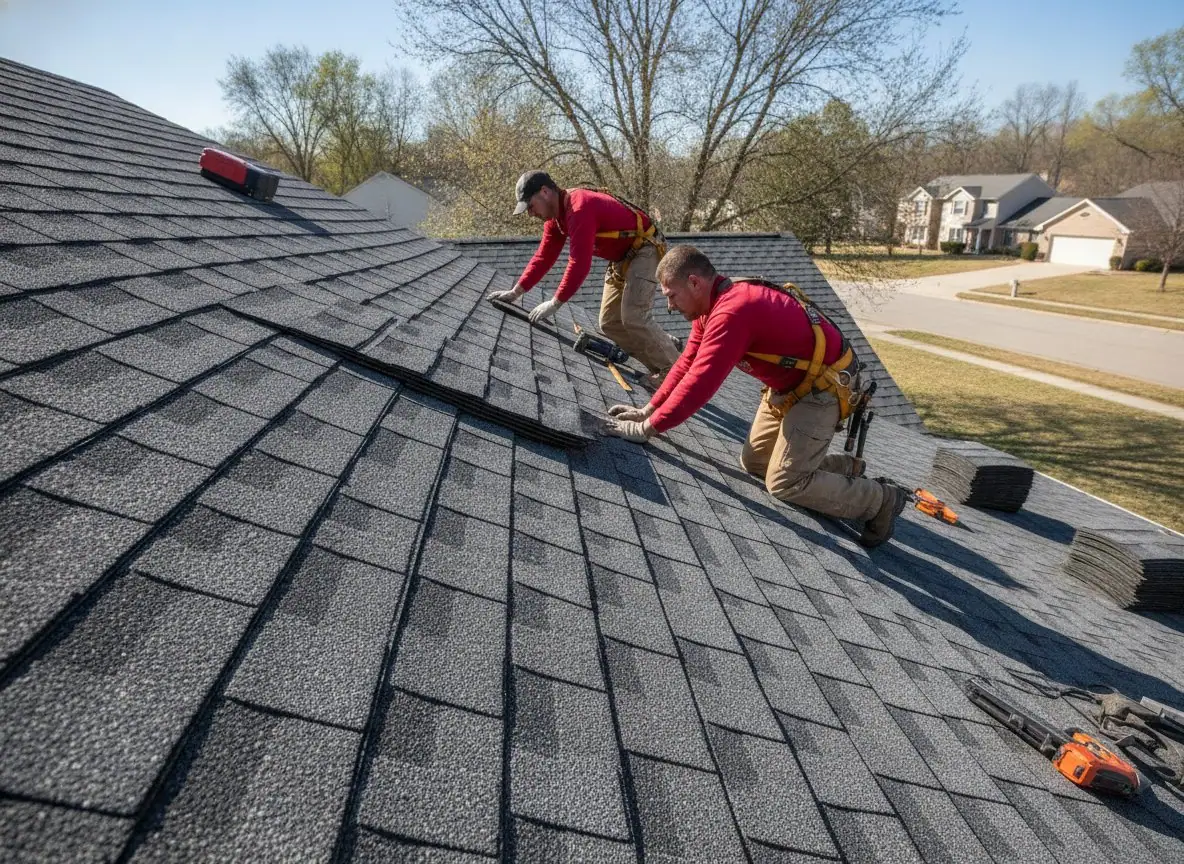
Understanding Standing Seam Metal Roof Installation
Standing seam metal roofing is defined by its raised interlocking seams — typically 1 to 2 inches high — that run vertically from the ridge to the eave of a roof. These raised seams conceal all fastening hardware, which means no exposed screws or nails that could loosen, corrode, or allow water penetration over time. Panels are most commonly fabricated from Galvalume steel, aluminum, copper, or zinc, with thicknesses ranging from 24-gauge to 26-gauge steel being the residential standard.
The system’s origins trace to 18th-century European architecture, where standing seam copper roofing adorned cathedrals and civic buildings. In New England, the style was adopted throughout the 19th century for institutional and high-end residential construction. You can still see original standing seam copper roofing on several churches and public buildings in Greater Boston, some more than 150 years old — a testament to the material’s longevity.
Read moreShow less
There are two primary installation methods: field-formed and factory-formed (structural and architectural). Structural standing seam panels are self-supporting and can span roof purlins without solid sheathing, making them popular for commercial and agricultural applications. Architectural standing seam panels require a solid decking substrate and are the standard choice for Newton’s residential and mixed-use buildings.
In Newton specifically, standing seam metal roofing has seen a marked increase in adoption over the past decade, driven by several factors: growing homeowner awareness of lifecycle costs, the proliferation of solar panel installations (standing seam’s clamp-based solar mounting eliminates roof penetrations), and the City of Newton’s sustainability goals outlined in its Climate Action Plan. Neighborhoods such as Chestnut Hill and Waban, known for their higher-value historic homes, have embraced standing seam copper and zinc as period-appropriate upgrades that also deliver modern performance.
Building types where standing seam metal roofing excels in Newton include Victorian-era single-family homes, 1920s–1950s Colonial Revivals, contemporary mixed-use structures near Newton Corner, and flat-to-low-slope commercial buildings along Washington Street and Needham Street corridors.
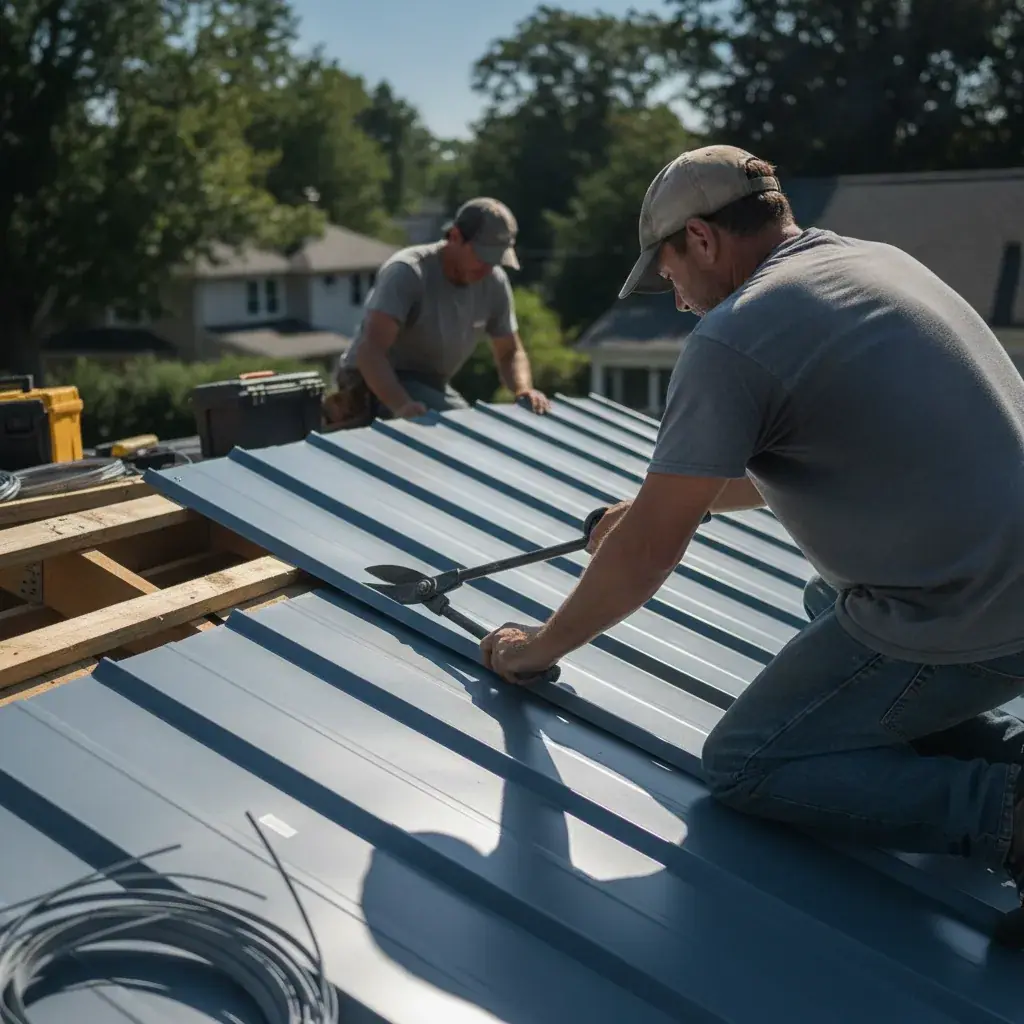
Why Standing Seam Metal Roof Installation Is Needed in Newton, MA
Severe Winter Weather and Ice Dam Formation
Newton averages approximately 48 inches of snowfall per year, with single-storm totals occasionally exceeding 24 inches — as seen during the January 2015 nor’easter that deposited nearly 30 inches across the Greater Boston area in under 48 hours. When snow accumulates on a roof and then partially melts from interior heat conduction, water refreezes at the cold eaves, forming ice dams. These ice dams force water under shingle tabs and into the roof assembly, causing deck rot, insulation saturation, and interior ceiling damage.
Standing seam metal roofing virtually eliminates ice dam damage because its smooth, continuous surface sheds snow rapidly, and its concealed fastener system prevents water from penetrating even when standing water is present. The thermal expansion joints engineered into standing seam panels also accommodate the dramatic temperature swings Newton experiences — from lows below 0°F in January to highs above 90°F in July — without cracking, buckling, or separating at seams.
Freeze-Thaw Cycling and Asphalt Shingle Degradation
Newton’s climate averages more than 90 freeze-thaw cycles annually. Each cycle causes asphalt shingles to expand and contract, gradually cracking granule-coated surfaces and exposing the underlying fiberglass mat. This degradation accelerates dramatically after the 15-year mark for standard 30-year architectural shingles. Many Newton homes built during the 1980s and 1990s construction boom — particularly in the Newton Highlands and Auburndale neighborhoods — are now reaching the end of their original shingle lifespan and experiencing this systemic failure.
Wind Exposure from Nor’easters
Newton’s position in the Greater Boston metro area exposes it to sustained nor’easter winds that regularly reach 50–70 mph, with gusts exceeding 80 mph during major events like the March 2018 nor’easter series that caused widespread roofing damage across Middlesex and Norfolk counties. Asphalt shingles are rated to resist winds of 60–130 mph depending on fastening method, but real-world performance frequently falls short. Standing seam panels, with their clip-based hidden fastener system, are engineered to resist wind uplift forces exceeding 160 mph when properly installed — well above any wind event recorded in Newton’s meteorological history.
Newton’s Canopy and Moisture Conditions
Newton is one of the most tree-canopied cities in Massachusetts, earning recognition as a Tree City USA for over 30 consecutive years. While beautiful, this canopy creates persistent moisture conditions on rooftops — shading that slows drying, organic debris accumulation in valleys and gutters, and increased moss and algae growth. The combination of Newton’s glacially deposited silty loam soils (common in the Charles River watershed areas near Auburndale and Newton Lower Falls) and high relative humidity under tree cover accelerates organic growth on porous roofing materials. Standing seam metal, being non-porous and typically coated with PVDF (Kynar) finishes, resists biological growth entirely.
Historic District Compliance
Several Newton neighborhoods fall under local historic district guidelines, including portions of Chestnut Hill and Newton Centre. Standing seam metal roofing — particularly in copper or zinc — is often the only material approved for historic district replacements, making professional installation not just preferable but sometimes legally required.
Free, no-obligation estimates
Talk to Newton Roofing Solutions
Tell us what you need and we’ll take it from there.
Signs You Need Standing Seam Metal Roof Installation in Newton
Visible Roof Surface Deterioration
- Curling, cupping, or missing shingle tabs, particularly on south- and west-facing slopes receiving maximum UV exposure
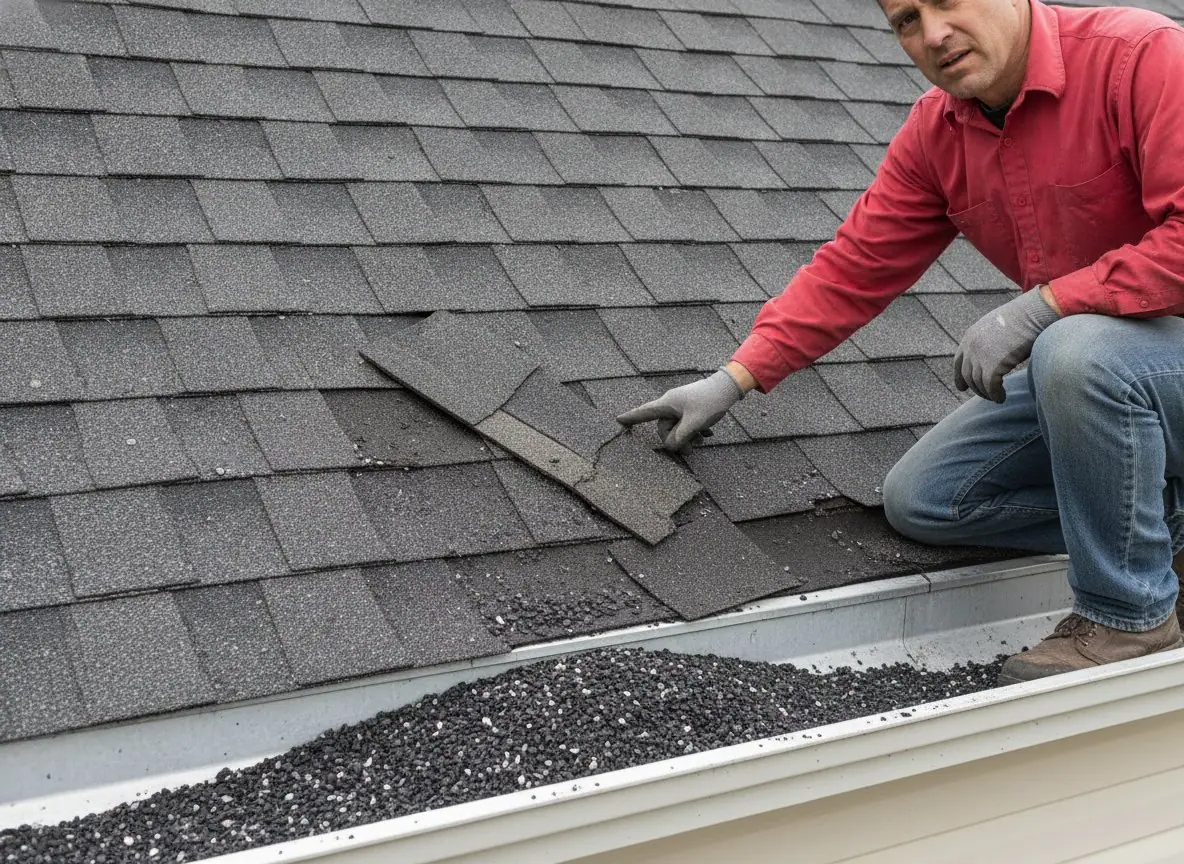
- Visible granule loss creating bare patches — granule accumulation in gutters exceeding a quarter-inch depth indicates accelerated shingle aging
- Rust staining, corrosion, or open seams on existing exposed-fastener metal roofing systems
- Visible sagging between rafters suggesting deck saturation or structural loading from ice accumulation
Interior Warning Signs
- Water stains on attic sheathing or ceiling drywall, especially within 18–24 inches of exterior walls where ice dams typically form
- Daylight visible through the roof deck when inspecting the attic space
- Musty odor in attic spaces indicating chronic moisture infiltration and potential mold colonization
- Increased heating or cooling costs suggesting compromised attic insulation from moisture damage
Urgency Indicators
- Active leaking during rainfall or snowmelt — treat as an emergency requiring immediate temporary weatherproofing
- Roofing system age exceeding 20 years on standard asphalt shingles in Newton’s climate
- Recent hail events or storm damage with visible impact marks greater than 1 inch in diameter on soft metals like flashing or gutters
Schedule a professional roof inspection if you observe two or more of these indicators simultaneously.
Standing Seam Metal Roofing Methods and Approaches
Snap-Lock Standing Seam (Most Common Residential Application)
Snap-lock panels feature a leg that snaps over an adjacent panel leg without mechanical seaming equipment. This system is ideal for Newton’s steep-slope residential applications — typically pitches of 3:12 and above — and offers faster installation with excellent performance. Most Newton single-family home installations use snap-lock Galvalume or aluminum panels in 16- or 18-inch widths.
Mechanically Seamed Standing Seam (Premium and Low-Slope Applications)
Mechanically seamed systems use an electric seaming tool to fold panel legs into a watertight double-lock seam. This method is required for roof pitches below 3:12 and is the preferred choice for Newton’s commercial buildings along Washington Street and Route 9 corridors. The double-lock seam achieves superior wind uplift resistance, critical for flat-roof commercial structures exposed to open-sky nor’easter winds.
Copper Standing Seam (Historic District and Prestige Residential)
Copper standing seam roofing is the material of choice for Newton’s historic district properties and high-value estates, particularly in Chestnut Hill and Waban. Copper develops a protective patina over 10–20 years, is fully recyclable, and carries an expected service life exceeding 100 years. All copper work requires specialized soldering and forming skills that our Newton team provides.
Structural Standing Seam (Commercial and Agricultural)
For Newton’s light commercial and mixed-use construction, structural standing seam panels can span open purlins without solid sheathing, reducing material costs on large low-slope applications. This approach is applicable for commercial projects exceeding 10,000 square feet of roof area.
Over-Roofing (Retrofit Installation)
In select cases where the existing deck is sound and local code permits, standing seam panels can be installed over existing shingles using a furring strip or recovery board system. This eliminates tear-off costs and adds an insulating air gap. We evaluate Newton properties individually for over-roofing suitability during the initial assessment.
Standing Seam Metal Roof Installation Cost in Newton, MA
Understanding the investment involved in standing seam metal roof installation helps Newton homeowners and commercial property owners plan effectively. Costs vary based on material, roof complexity, and site conditions.
Typical Price Ranges
- Galvalume Steel Standing Seam (Residential): $12–$18 per square foot installed, including tear-off, underlayment, flashing, and labor. A typical 2,000 sq ft Newton Colonial roof runs $24,000–$36,000.
- Aluminum Standing Seam (Residential/Light Commercial): $14–$20 per square foot installed. Aluminum’s corrosion resistance makes it preferred for coastal-adjacent Newton properties near the Charles River corridor.
- Copper Standing Seam (Prestige/Historic): $30–$50 per square foot installed. A full copper installation on a 2,000 sq ft roof typically runs $60,000–$100,000 but carries a 100+ year expected lifespan.
- Zinc Standing Seam: $25–$40 per square foot installed, offering self-healing properties and a distinctive weathered aesthetic popular in Newton’s contemporary architectural projects.
Read moreShow less
Newton-Specific Cost Factors
- Permit fees: Newton’s Inspectional Services Department charges roofing permit fees based on project valuation, typically $150–$400 for residential projects.
- Deck replacement: Newton’s older housing stock frequently requires partial deck replacement, adding $2–$4 per square foot where damage is found.
- Complexity surcharges: Homes with multiple dormers, chimneys, and valleys common in Newton’s Victorian neighborhoods add 15–25% to base installation costs.
- Historic district compliance: Material and color approval processes for Chestnut Hill historic properties may add design consultation fees.
Request a free detailed estimate tailored to your Newton property’s specific dimensions and requirements.
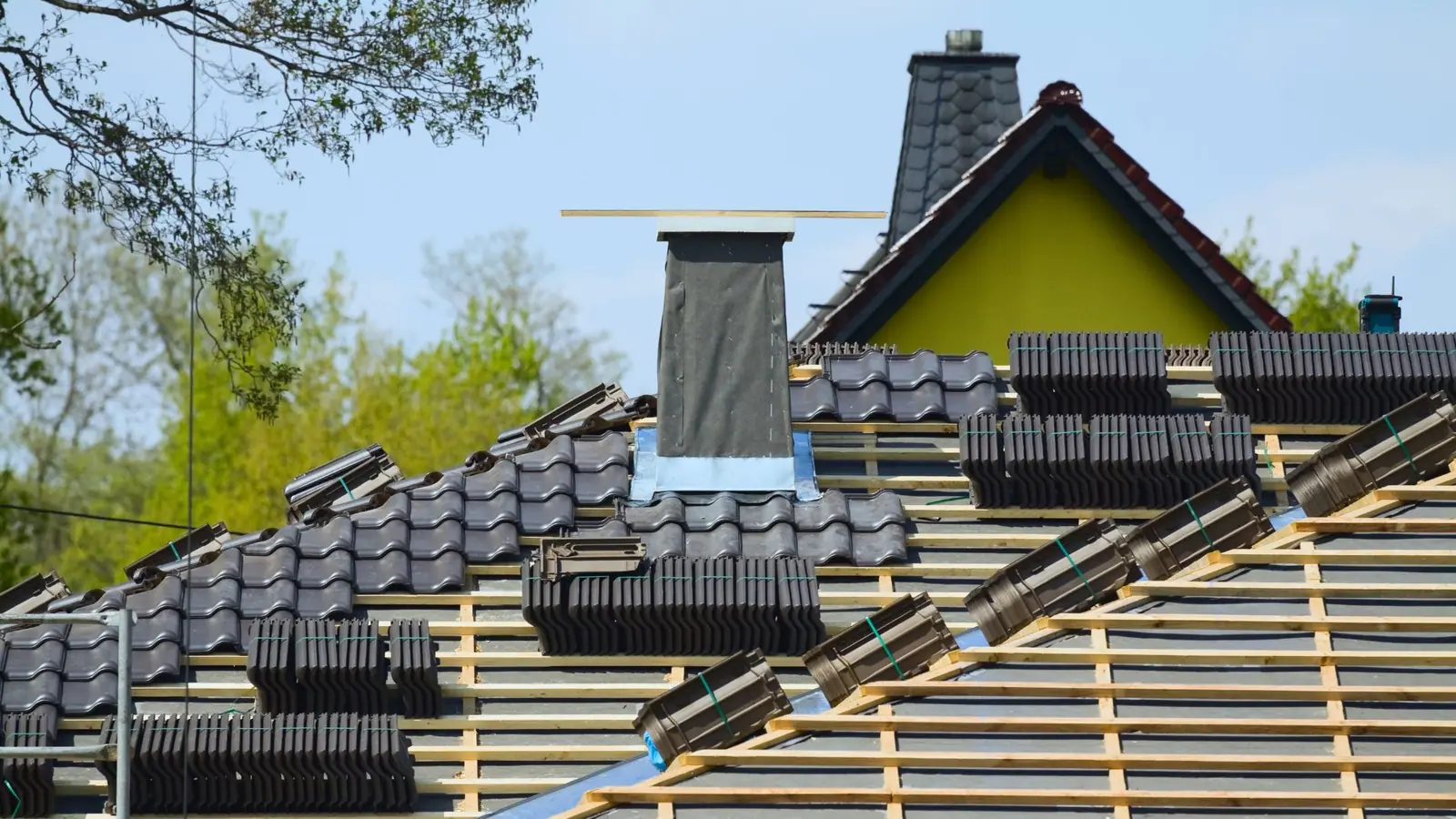
Newton Neighborhoods We Serve
Chestnut Hill
Home to some of Newton’s most architecturally significant properties, Chestnut Hill features large Victorian and Tudor Revival estates built primarily between 1890 and 1930. Many properties here have existing copper or slate roofing requiring like-for-like replacement. Our team navigates Chestnut Hill’s historic district requirements and regularly installs copper standing seam systems that meet both preservation standards and modern performance expectations.
Newton Centre
Newton Centre’s mix of Colonial Revival homes (1920s–1940s) and mid-century construction presents common ice dam challenges due to moderate roof pitches and mature tree canopy reducing solar gain. We frequently install snap-lock Galvalume systems here with enhanced ice-and-water shield coverage.
Newtonville
Newtonville’s denser residential stock, including many triple-deckers and two-family homes built 1900–1950, benefits from aluminum standing seam’s lightweight properties, which reduce loading on older structural framing common to the neighborhood’s housing inventory.
Waban
Waban’s premium single-family homes, many dating to the 1920s–1950s, feature complex roof geometries with multiple hips and dormers. Our experienced Newton crews specialize in the custom flashing fabrication that Waban’s architecturally detailed homes require.
Auburndale
Situated along the Charles River, Auburndale’s proximity to water increases ambient humidity and accelerates organic growth on traditional roofing materials. Standing seam metal’s non-porous surface is ideally suited to Auburndale’s moisture-heavy microclimate.
Standing Seam Metal Roof Maintenance Tips for Newton Homeowners
While standing seam metal roofing requires far less maintenance than asphalt shingles, Newton’s specific climate conditions call for proactive care.
- Annual debris clearing (October–November): Clear leaves and organic matter from valleys and gutters before Newton’s first snowfall to prevent ice dam-aggravating blockages and moisture retention under leaf packs.
- Post-storm inspection: After major nor’easters, visually inspect panel seams, ridge caps, and flashings from the ground using binoculars. Report any displaced panels immediately to prevent water infiltration during subsequent storms.
- Moss and algae prevention: Newton’s heavy tree canopy promotes biological growth. Install zinc or copper strips at the ridge — runoff from these metals naturally inhibits moss and algae on the panel surface below.
- Gutter maintenance (spring and fall): Clean gutters twice annually and ensure downspouts direct water at least 6 feet from the foundation — especially important for Newton homes on the glacial silty loam soils near the Charles River watershed.
- Avoid abrasive cleaning: Never use wire brushes or pressure washing with concentrated streams on panel surfaces, which can damage PVDF coatings. Use low-pressure rinsing with mild detergent only.
- Solar clamp inspection: If solar panels are mounted using standing seam clamps (common on Newton’s solar-forward properties), inspect clamp positions annually to confirm they haven’t shifted from thermal cycling.
- Professional biennial inspection: Schedule a professional roof maintenance visit every two years to inspect seam integrity, fastener torque on trim pieces, and flashing sealant condition.
Why Choose Newton Roofing Solutions for Standing Seam Metal Roof Installation
Newton Roofing Solutions is a locally operated roofing company built specifically to serve the unique residential and commercial roofing needs of Newton and the surrounding Greater Boston communities. Our installers are trained and certified in standing seam metal roofing systems from leading manufacturers, ensuring installations meet both manufacturer specifications and Massachusetts State Building Code requirements.
We understand Newton’s architectural diversity — from the historic estates of Chestnut Hill to the mid-century Colonials of Newton Highlands — and we approach every project with material knowledge, design sensitivity, and technical precision that out-of-area contractors simply cannot match.
Read moreShow less
Our team manages the complete project lifecycle: permit acquisition from Newton’s Inspectional Services Department, material procurement, installation, and final city inspection coordination. We use only premium materials from established manufacturers with proven performance in New England climates.
We serve all Newton villages and extend our services to Boston, Brookline, Cambridge, Waltham, Wellesley, Needham, and surrounding communities. Learn more about our team or call (617) 249-7118 to speak with a Newton standing seam specialist today.
FAQ
Frequently Asked Questions: Standing Seam Metal Roof Installation in Newton, MA
How much does standing seam metal roof installation cost in Newton, MA?
In Newton, installed costs for standing seam metal roofing typically range from $12–$18 per square foot for Galvalume steel systems, $14–$20 per square foot for aluminum, and $30–$50 per square foot for copper. For a typical 2,000 square foot Newton Colonial, expect a total investment of $24,000–$36,000 for a Galvalume system. Newton-specific factors like permit fees, complex dormer and chimney flashing, and potential deck replacement on older homes can affect final pricing. Contact us for a free, property-specific estimate.
How long does standing seam metal roof installation take in Newton?
Most residential standing seam installations in Newton are completed in 3–5 days of active installation work. The full project timeline, including design, permitting through Newton’s Inspectional Services Department (typically 7–10 business days), and material lead times, is generally 3–5 weeks from signed contract to completed installation.
Is a building permit required for standing seam metal roof installation in Newton?
Yes. The City of Newton requires a building permit for all roof replacement projects, including standing seam metal roof installation. Newton Roofing Solutions handles the complete permit application process on your behalf, including submission to the Inspectional Services Department at Newton City Hall and coordination of the required final inspection.
How does standing seam metal roofing handle Newton’s ice dams?
Standing seam metal roofing is one of the most effective solutions for Newton’s chronic ice dam problem. The smooth, continuous panel surface promotes rapid snow shedding before ice dam conditions develop. The concealed fastener system eliminates penetration points where ice dam water typically enters traditional roofing systems. Combined with proper attic insulation and ventilation improvements, standing seam roofing effectively ends ice dam damage cycles common in Newton’s 19th- and early 20th-century homes.
How long will a standing seam metal roof last in Newton’s climate?
Properly installed standing seam metal roofing systems carry expected service lives of 40–70 years for Galvalume steel and aluminum, and 80–100+ years for copper and zinc. In Newton’s demanding climate — with its 90+ annual freeze-thaw cycles, nor’easter wind events, and significant snow loads — standing seam significantly outperforms the 15–20 year real-world lifespan of standard asphalt shingles.
Can I install solar panels on a standing seam metal roof in Newton?
Yes, and standing seam is the preferred roofing system for solar installations in Newton. Solar panel mounting systems for standing seam use S-5! or equivalent seam clamps that attach directly to the raised seam without any roof penetrations. This is particularly valuable given Newton’s active solar incentive programs and the city’s Climate Action Plan goals. No penetrations mean no new leak points and no voided roof warranties.
Does standing seam metal roofing work with Newton’s historic district requirements?
Yes. Copper and zinc standing seam roofing is frequently the material specified or approved by Newton’s Historic District Commission for properties in designated historic areas, including portions of Chestnut Hill and Newton Centre. Standing seam in copper is historically authentic for New England institutional and residential architecture dating to the 19th century. We assist homeowners through the historic district approval process as part of our project management services.
Do you offer standing seam metal roofing for commercial properties in Newton?
Absolutely. Newton Roofing Solutions installs commercial standing seam metal roofing for office buildings, retail centers, mixed-use developments, and institutional facilities throughout Newton and the Greater Boston area. Mechanically seamed structural standing seam systems are well-suited to Newton’s commercial corridor properties along Washington Street, Needham Street, and Route 9.
Get Your Free Standing Seam Metal Roof Installation Estimate in Newton, MA
Ready to protect your Newton home or commercial property with a standing seam metal roof built to withstand decades of New England winters, nor’easters, and freeze-thaw cycles? Newton Roofing Solutions is your local expert for premium standing seam metal roof installation throughout Newton and Greater Boston.
Our team is standing by to provide a comprehensive, no-obligation assessment of your property and a detailed written estimate. We handle everything from design and permitting to installation and final inspection — making your roofing project seamless from start to finish.
Call us now at (617) 249-7118 to speak directly with a Newton standing seam specialist, or submit a contact form online and we’ll respond within one business day. Serving Newton, Boston, Brookline, Cambridge, Waltham, Wellesley, Needham, and all surrounding communities.
Get in touch
Find roofing help near you
Request a free estimate online or give us a call — our team will follow up quickly.
- Call us(617) 249-7118
- Visit564 Commonwealth Ave, Newton Centre, MA 02459
- HoursMon-Sun: 7:00 am – 7:00 pm